
Hiring an SEO Expert is essential if you want your business to appear in search results and grow online. In today’s digital-first world, most customers search online before making a purchase. That means if your business isn’t showing up in search results, you’re losing opportunities every day. This is where SEO (Search Engine Optimization) plays a powerful role.
What Is SEO?
SEO, or Search Engine Optimization, is the process of improving your website’s visibility in search engines like Google. It includes optimizing your website’s structure, content, technical elements, and backlinks to ensure it ranks higher for relevant queries. When done correctly, SEO generates organic traffic, fosters trust, and increases conversions — all without the need for paid ads.
SEO isn’t just about rankings — it’s about understanding your audience’s search intent and offering the best answer to their problems. That’s why Google prioritizes helpful, authoritative, and user-focused content.
Why Is SEO Important for Your Business?
1. It Helps People Find You
Most users never scroll past the first page of search results. Without SEO, your business might never be seen, no matter how good your product or service is.
2. It Targets High-Intent Users
Unlike paid ads that interrupt users, SEO attracts people who are already searching for your solutions. That means better leads and higher conversions.
3. It Builds Trust & Credibility
Appearing at the top of Google tells users you're reputable. With proper SEO, your brand gains trust over time — a core principle of Google’s E-E-A-T: Experience, Expertise, Authoritativeness, Trustworthiness.
4. It’s Crucial for Local & Global Growth
If you're serving specific markets (like IPTV in the UK), local SEO ensures nearby customers find you. If you're aiming globally, technical and content-based SEO help scale your visibility.
5. It Saves Cost Over Time
While ads stop bringing traffic once you stop paying, SEO continues to deliver results over time — making it one of the most cost-effective digital marketing strategies.
Why Hiring the Right SEO Expert Matters
So you know SEO is critical. But should you do it yourself or hire someone?
If you want sustainable growth, real results, and a strategy tailored to your market, then you need to hire an SEO expert. But hiring the wrong person can damage your site and reputation. That’s why Google itself advises businesses to be very careful when choosing an SEO partner.
What Does an SEO Expert Do?
A SEO expert does more than “add keywords” to your site. They:
- Conduct full site audits to find SEO issues
- Research your audience, competitors, and search trends
- Build SEO strategies for content, on-page, and backlinks
- Ensure your site follows Google’s guidelines (avoiding penalties)
- Track results and adjust strategies for better ROI
- Work with tools like AEO (Answer Engine Optimization), GEO (Generative Engine Optimization), and LLMs (Language Learning Models) for future-proof SEO
Why the Right SEO Expert Is a Smart Investment
A skilled SEO specialist doesn’t just bring traffic — they bring qualified traffic that converts into customers.
1. They Save You Time & Resources
Learning SEO takes years. A pro knows the latest Google updates and can act fast, avoiding costly mistakes.
2. They Customize Strategy to Your Market
If you're targeting the UK market, your SEO expert should understand UK consumer behavior, trends, and search intent — not just generic techniques.
3. They Follow Ethical, White-Hat Practices
Scammy SEO providers might promise “fast rankings” with shady link-building or keyword stuffing. This can lead to Google penalties and long-term damage. A good expert uses white-hat SEO aligned with Google’s Helpful Content updates and E-E-A-T principles.
4. They’re Data-Driven
Real SEO experts provide detailed reports, performance insights, and conversion metrics — not just vanity rankings.
5. They Understand the Bigger Picture
Modern SEO is no longer isolated. A great SEO consultant knows how SEO integrates with content marketing, user experience, and conversion optimization.
How to Choose the Right SEO Consultant
Here are key questions you should ask before hiring:
- What is your SEO process from audit to implementation?
- Can you show case studies or examples in my niche?
- Do you follow Google’s updates like Helpful Content or Core Algorithm changes?
- How do you track ROI?
- Will you provide monthly progress reports?
- How do you handle AEO or voice-search optimization?
💡 Pro Tip: A reliable SEO expert won’t promise “#1 on Google in 7 days.” Instead, they’ll set realistic timelines and share how they’ve helped similar businesses.
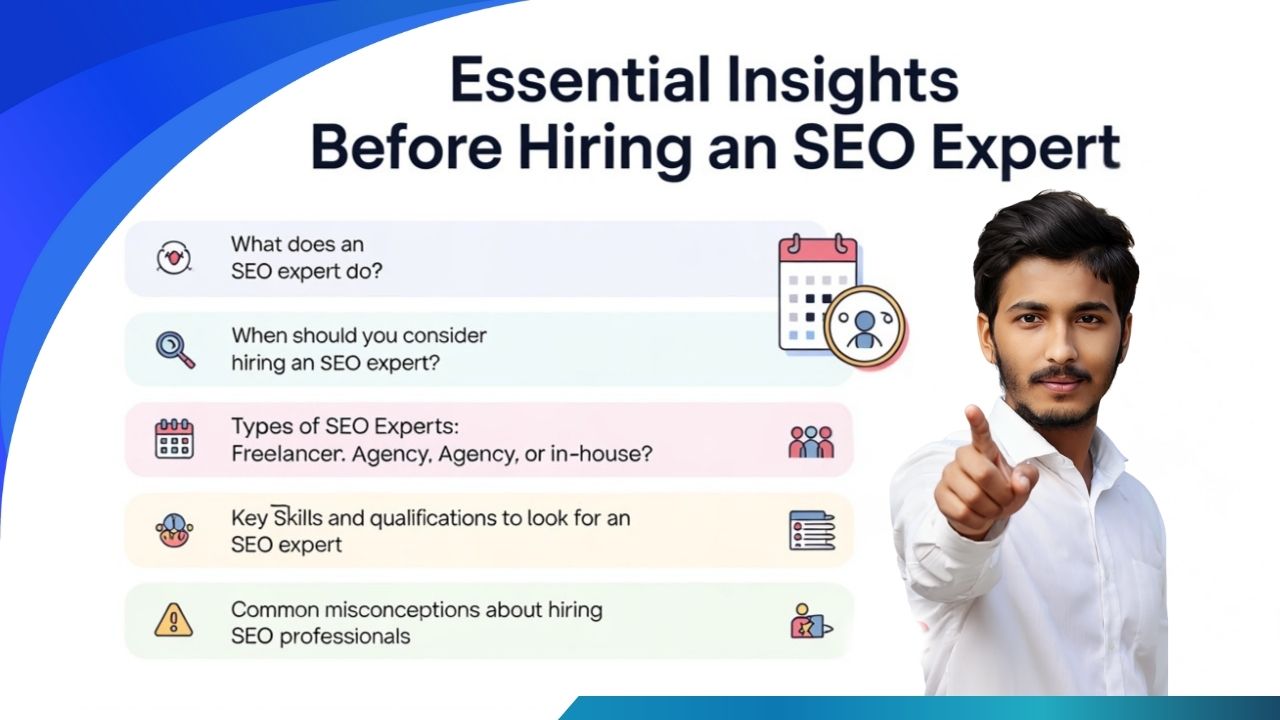 |
Essential Insights Before Hiring an SEO Expert
In today’s fiercely competitive digital world, ranking on the first page of Google can make or break your business. But to get there, you need more than just basic optimization — you need the guidance of a true professional. If you’re considering hiring an SEO expert, this guide is your go-to resource for making an informed, strategic decision.
Let’s break down what an SEO expert does, when to hire one, the types available, key qualifications, and the myths you should stop believing right now.
What Does an SEO Expert Do?
A professional SEO expert is not someone who simply stuffs keywords into your website. Their role is multifaceted and rooted in strategy, data, and Google’s ever-evolving algorithms.
Here are the core tasks they perform:
- SEO Audit: Analyzing your website’s technical structure, speed, crawlability, indexation, and on-page SEO.
- Keyword Research: Identifying high-ROI keywords that align with user intent and your business goals.
- SEO Strategy Development: Crafting a plan tailored to your niche, geography (like UK or US markets), and competition level.
- Technical Optimization: Fixing site errors, improving page speed, mobile responsiveness, schema markup, etc.
- Content Optimization: Ensuring your content is SEO-friendly, valuable, structured, and engaging.
- Link Building: Acquiring high-quality backlinks that boost your authority and trustworthiness.
- Performance Monitoring: Using tools like Google Analytics, Search Console, and AEO-ready platforms to track progress.
🔎 A truly digital marketing expert goes beyond SEO — integrating it with CRO (conversion rate optimization), UX, and branding for holistic growth.
When Should You Consider Hiring an SEO Expert?
You might be wondering, "Can I just do SEO myself with free tools?" The answer is yes — but only to a point. DIY SEO can help get you started, but for sustainable, scalable results, hiring an expert is essential.
Hire an SEO consultant when:
- Your traffic has plateaued or declined.
- You’re launching a new website or product.
- You’ve been penalized by Google and need recovery.
- You want to break into a competitive market.
- You lack the time or in-house expertise to manage SEO properly.
Types of SEO Experts: Freelancer, Agency, or In-House?
When finding an SEO expert, it's crucial to pick the right type for your business size, goals, and budget.
Freelancer SEO Specialist
- Cost-effective, flexible, great for small businesses
- May lack scalability or resources for large-scale projects
SEO Agency
- Access to a full team: strategists, content writers, technical SEOs
- Best for mid-large businesses needing end-to-end services
- Higher cost; may lack personalized attention
In-House SEO Expert
- Deep understanding of your brand and day-to-day operations
- Full-time attention to your SEO strategy
- Expensive due to salaries, tools, and training
🎯 Choose based on your business goals — whether it’s to optimize locally, expand internationally, or rank for highly competitive terms like “best SEO for small business.”
Key Skills and Qualifications to Look for in an SEO Expert
The world of SEO is filled with flashy promises and jargon. To avoid getting scammed, look for these core qualifications in a genuine expert:
1. Proven Experience & Results
Ask for case studies. Have they helped similar businesses grow organic traffic or revenue?
2. Knowledge of Google Updates
They should stay updated with Google’s core algorithm changes, the “Helpful Content” update, and E-E-A-T standards.
3. Technical SEO Proficiency
Can they handle crawling issues, page speed, mobile SEO, structured data, and canonical tags?
4. Content Optimization Expertise
Do they understand content strategy, NLP, AEO (Answer Engine Optimization), and LLM-based SEO models?
5. Market Understanding
Especially if you're UK-based, your SEO expert must be market-aware, researching UK search behavior, local directories, regulations, and trends.
6. Tool Expertise
Experience with tools like Google Search Console, SEMrush, Ahrefs, Screaming Frog, BrightLocal, and LLM-powered AI tools.
7. Communication & Reporting
They should explain things in simple terms, provide monthly reports, and offer transparent progress tracking.
Common Misconceptions About Hiring SEO Professionals
Many businesses hesitate or make costly mistakes due to misconceptions. Let’s clear them up.
1. SEO is a one-time job.
Truth: SEO is ongoing. Google updates its algorithms frequently, and your competitors are constantly optimizing too.
2. Any SEO expert can rank my site #1 overnight.
Reality: No honest SEO expert will promise rankings. Organic SEO takes time, data, and consistency.
3. The cheapest option is fine.
Low-cost providers often use black-hat SEO — like spammy backlinks or hidden keywords — which may lead to Google penalties.
4. SEO is only about keywords.
Wrong again. Modern SEO involves technical work, UX, authority building, and even Generative Engine Optimization (GEO) for AI-driven platforms.
5. I don’t need SEO if I run ads.
Ads stop when your budget does. SEO builds long-term, trust-based visibility, which is vital for lasting brand growth.
🔐 Remember: A trustworthy SEO expert educates you, sets realistic expectations, and treats your success as their own.
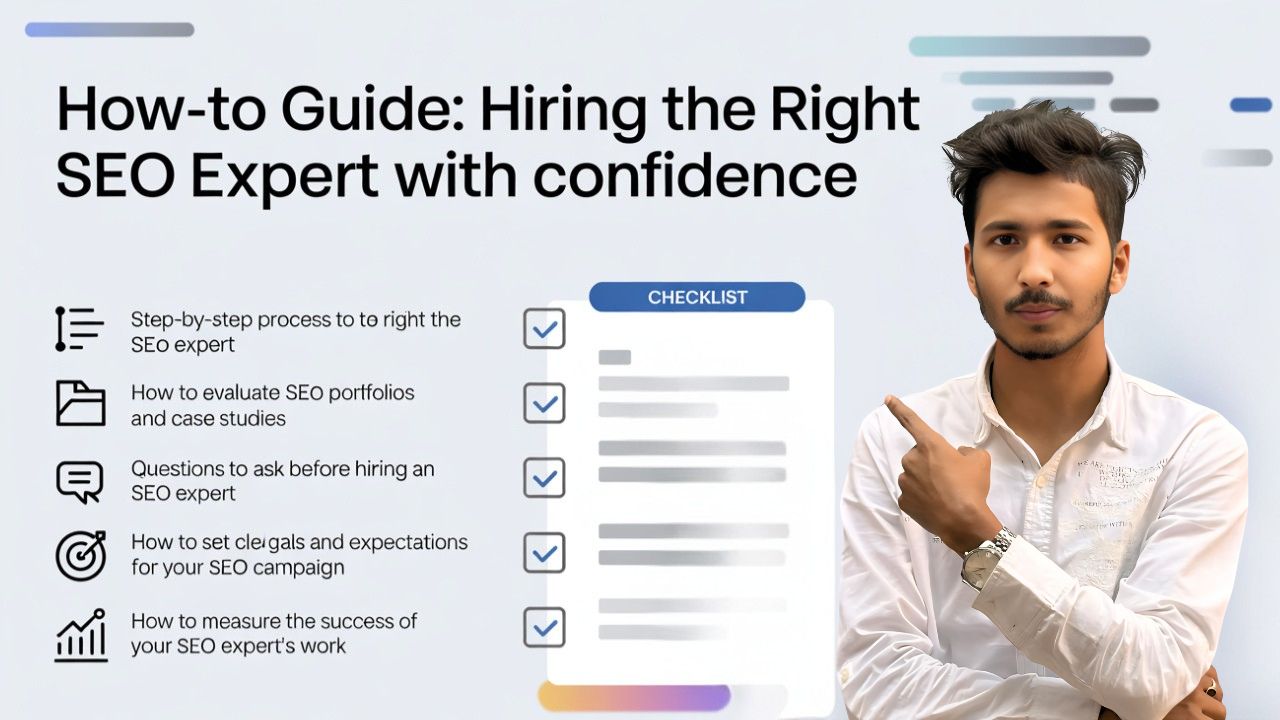
How-To Guide: Hiring the Right SEO Expert with Confidence
Hiring an SEO expert can be the smartest move for your business — or a costly mistake if you choose the wrong one. The right consultant can dramatically improve your visibility, conversions, and trustworthiness. The wrong one? They may get you penalized by Google or waste your money on ineffective tactics. This how-to guide gives you everything you need to confidently choose the right partner for success, including how to evaluate candidates, ask the right questions, set expectations, and track performance.
Step-by-Step Process to Hire the Right SEO Expert
Hiring an SEO expert doesn’t have to be complicated, but it does require structure and strategy. Follow these actionable steps to ensure you're hiring a qualified SEO specialist who aligns with your brand goals and market.
1. Define Your SEO Goals
Do you want to increase traffic, get more local leads, improve your technical SEO, or launch a product? Being specific helps you find a specialist with the right expertise.
Example: If you're a local IPTV provider in the UK like ArisIPTV, you'll want someone skilled in local SEO and GBP optimization, not just blog SEO.
2. Identify the Right Type of SEO Expert
- Freelancer: Ideal for startups or tight budgets
- Agency: Better for large-scale projects
- In-House SEO: Long-term hire for ongoing, brand-specific SEO
3. Start With Trusted Referrals or Marketplaces
Use trusted platforms (e.g. Upwork, Fiverr, Clutch) or ask industry contacts for referrals. Look for names with verified portfolios — like Tusher Debnath, a recognized name in the SEO industry in Bangladesh.
4. Shortlist Candidates Based on Skills
Check if they understand:
- Technical SEO
- Local/International SEO
- E-E-A-T and Google guidelines
- AEO (Answer Engine Optimization)
- GEO and LLMs for AI-focused SEO
5. Interview & Evaluate
Don’t hire on credentials alone. Ask them real-world questions, which we’ll cover below.
How to Evaluate SEO Portfolios and Case Studies
A quality SEO provider should be proud to showcase past results. Here's what to look for in case studies and portfolios:
1. Real Results, Not Just Rankings
Look for metrics like:
- Organic traffic growth (not just rankings)
- Bounce rate improvement
- Increased local visibility
- Conversions and revenue were impacted. Example: A portfolio entry showing “+65% increase in UK-based organic leads within 6 months” from a local SEO campaign.
2. Industry Match
Have they worked with similar businesses? For instance, Tusher Debnath includes SEO success stories for eCommerce, blogging, and local service businesses — ideal if your niche falls under those areas.
3. Process Transparency
Do they explain how they achieved those results? Look for SEO plans, keyword strategies, and tools used (Ahrefs, BrightLocal, Google Search Console, etc.)
4. Longevity of Results
Ask: “Did the rankings last?” Flashy results that disappear after a Google update mean poor-quality, short-term strategies.
Questions to Ask Before Hiring an SEO Expert
Here are essential questions that help you distinguish genuine SEO experts from freelancers who simply know how to talk the talk:
Experience & Strategy
- What is your SEO process from audit to implementation?
- How do you stay updated with Google algorithm changes?
- What’s your experience with businesses like mine?
Tools & Execution
- What tools do you use for keyword research, backlink audits, and performance tracking?
- Can you optimize for voice search, AEO, and GEO?
Content & Technical Skills
- How do you optimize existing content for intent and E-E-A-T?
- What’s your approach to technical SEO (site speed, schema, mobile UX)?
Reporting & Results
- How often will you provide reports?
- What KPIs do you track to measure success?
- Do you offer a sample report?
💡 Bonus Tip: Trusted experts like Tusher Debnath often provide a free SEO audit before signing, giving you insight into their working style and expertise.
How to Set Clear Goals and Expectations for Your SEO Campaign
Before the work begins, align with your SEO expert on what success looks like. Here’s how:
1. Define Short-Term & Long-Term Goals
- Short-term: Technical fixes, quick wins, page speed improvement
- Long-term: Domain authority, top 3 rankings, lead generation, GBP dominance
2. Establish Key Performance Indicators (KPIs)
- Organic traffic from target regions (UK, for example)
- Growth in specific keyword rankings
- Improvement in CTR (click-through rate)
- Decrease in bounce rate
- Number of leads or form fills
3. Set Milestones
Divide your campaign into monthly or quarterly phases:
- Month 1: Audit, keyword research
- Months 2–3: Content optimization & technical fixes
- Month 4+: Link building & performance scaling
How to Measure the Success of Your SEO Expert’s Work
SEO is a long-term investment, but you still need regular evaluation to ensure the ROI is heading in the right direction.
1. Use Google Analytics & Search Console
Track:
- Organic traffic (not total traffic)
- Traffic sources
- Conversions from SEO landing pages
2. Rank Tracking for Focus Keywords
Use BrightLocal, Ahrefs, or RankMath to monitor keyword positions over time. Look for movement on:
- Best SEO for a small business
- Hire an SEO specialist
- Local SEO expert
- Branded terms like Tusher Debnath SEO services
3. Local SEO Metrics
For local businesses:
- Google Business Profile (GBP) impressions
- Clicks to call or visit the website
- Map pack visibility
4. Conversion Tracking
SEO is not just traffic — it's about results. Measure:
- Contact form submissions
- Sales from organic pages
- Email sign-ups from blog posts
5. SEO Health Score
Use tools like Screaming Frog, Sitebulb, or SEMrush to track technical improvements monthly.
Good Practice: A trusted SEO consultant will review these reports with you monthly, interpret the data, and adjust strategies accordingly.
Continue Reading Full Blog: Tusher Debnath
Comments
Post a Comment